What is a software development partner?
Many businesses hire developers and call it a partnership. It is not. A software development partner is something fundamentally different from a vendor you engage to complete a task and move on. Where a vendor delivers code, a partner co-owns outcomes. They ask the difficult questions before writing a single line, stay engaged after launch, and absorb accountability that would otherwise fall back on your team. Understanding that distinction matters because the wrong model does not just slow projects down. It produces systems that fail to evolve, accumulate technical debt, and require expensive rebuilds within a few years.
Table of Contents
- Key takeaways
- What a software development partner actually does
- Why a true partner outperforms traditional outsourcing
- How to choose a software development partner
- Common pitfalls when engaging development partners
- How to collaborate effectively with your partner
- My perspective on software partnerships
- Build something that lasts with Pixeldev
- FAQ
Key takeaways
| Point | Details |
|---|---|
| Partners co-own outcomes | A real software partner shares accountability for delivery and long-term system health, not just task completion. |
| Full lifecycle scope | Expect coverage across discovery, design, engineering, QA, cloud, and post-launch support under one roof. |
| Partnership beats price | The right partner fits your project size, industry, and engagement model rather than simply offering the lowest bid. |
| Ongoing support is non-negotiable | Software evolves after launch; a true partner provides maintenance, monitoring, and updates as your needs change. |
| Vet beyond testimonials | Client retention rates and average partnership length are stronger quality signals than reviews alone. |
What a software development partner actually does
The phrase gets used loosely, so it helps to be precise. A software development partner is an external organisation that takes on end-to-end responsibility for your software project. That means they are involved from the initial discovery phase through design, engineering, infrastructure, quality assurance, and ongoing support after you go live.
That scope matters because full-cycle delivery partners cover discovery, design, engineering, cloud infrastructure, QA, and post-launch support under one roof. When one team owns every stage, there are no handoff gaps. Nobody can point to another vendor and disclaim responsibility when something breaks.
The role of software partners in 2026 has also expanded to include AI-assisted delivery. AI-assisted engineering frameworks now boost developer productivity by 30 to 40 per cent at leading agencies, which means projects can start and deliver faster than was realistic five years ago. That productivity lift is not just a nice number. It changes how quickly a partner can validate ideas, iterate on feedback, and get working software in front of users.
Here is what the full scope of a genuine software development partner typically covers:
- Discovery and scoping: Understanding your users, workflows, technical constraints, and success criteria before any architecture is agreed upon
- Design and prototyping: Translating business requirements into interfaces and system designs you can test and refine
- Engineering and infrastructure: Building and deploying the software, including cloud configuration and security
- Quality assurance: Systematic testing across functionality, performance, and security before and after release
- Post-launch support: Monitoring, hotfixes, performance improvements, API updates, and feature evolution over time
Pro Tip: Ask any prospective partner to walk you through their post-launch support model on day one. If they hesitate or treat it as an afterthought, that tells you everything about how they define the relationship.
Why a true partner outperforms traditional outsourcing
Outsourcing software development used to be primarily about reducing costs. That model has not disappeared, but the businesses getting the best results have moved past it. Outsourcing today is about gaining flexibility, expertise, and competitive advantage through partnerships, not just cost savings.
The practical benefits of working with a genuine software development partner rather than a collection of ad-hoc vendors are worth spelling out clearly.
- Reduced coordination overhead. When you hire separate vendors for design, development, and infrastructure, you become the project manager holding everything together. A single partner eliminates that overhead and the finger-pointing that comes with fragmented delivery.
- Senior engineer continuity. Rotating junior developers across your project is a hidden cost. A committed partner assigns senior engineers who accumulate context about your system over time, making each subsequent phase faster and more reliable.
- Faster adaptation to change. Business requirements shift. A partner who understands your product deeply can absorb those changes without starting from scratch. Dedicated teams as extensions of your organisation improve collaboration, continuous planning, and product vision alignment.
- Battle-tested processes. You do not want your software project to be where a partner learns their methodology. True partners bring processes that adapt to evolving business needs and have been refined across many projects.
- Risk mitigation. When one team owns the full lifecycle, accountability is clear. There is no ambiguity about who is responsible for a security gap or a performance regression.
“The right software development partner is not always the cheapest or the largest, but the one that fits your project size, industry, and engagement model.” — Software development outsourcing in 2026
The difference between a bespoke software solution and an off-the-shelf product often comes down to whether you had a partner who understood your business deeply enough to build something that genuinely fits, rather than something that almost fits.
How to choose a software development partner
Choosing well requires looking past polished case studies and agency websites. Here are the criteria that actually matter when evaluating candidates.
Technical capability and industry experience
Check whether their technical skills match your project requirements. A partner who has built fintech platforms has a different capability profile than one specialising in healthcare systems or enterprise web applications. Mismatched experience creates avoidable risk. You can review application development workflow practices to understand what genuine technical rigour looks like in a delivery process.

Communication and transparency
Good partners ask questions to understand your users, workflows, risks, and success criteria before providing estimates. If a potential partner sends you a fixed-price quote within 48 hours of a first conversation, without a discovery engagement, treat that as a warning sign. Strong communication includes clear milestones, sprint reviews, and visible progress tracking.
Post-launch engagement model
Software evolves with new features, API updates, and user feedback long after the initial build. Ask directly: what does their post-launch support look like, how quickly do they respond to critical issues, and do they offer ongoing managed software support as a defined service?
Verified outcomes and retention metrics
| Evaluation factor | What to look for | Why it matters |
|---|---|---|
| Client retention rate | Partnerships averaging 2 or more years | Indicates long-term trust and delivery quality |
| Recommendation rate | 90 per cent or higher verified rating | More reliable than curated testimonials |
| Case study depth | Measurable outcomes, not just screenshots | Proves ability to deliver real business results |
| Senior engineer continuity | Named senior staff assigned to your project | Reduces context loss and accelerates delivery |
Client retention rates and verified outcomes are more reliable indicators of partner quality than testimonials alone. Look for publicly verified data rather than quotes on a homepage.
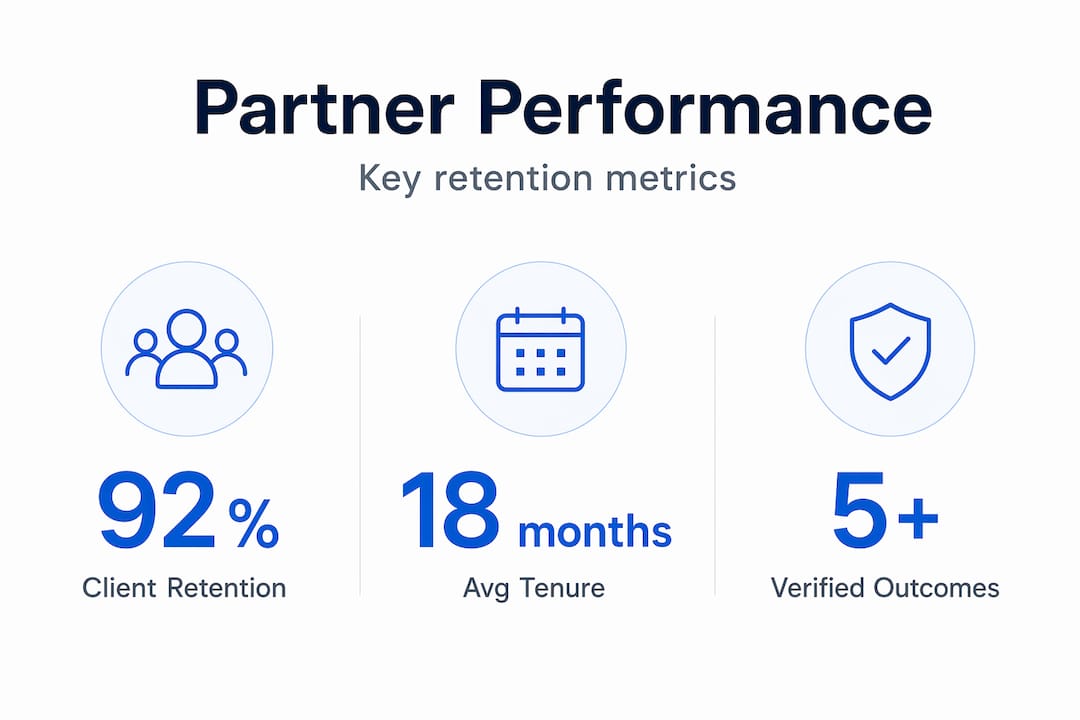
Pro Tip: Ask a prospective partner for their average client tenure and their process for handling post-launch issues. Short average tenures and vague support answers reveal more than any case study.
Common pitfalls when engaging development partners
Even businesses that understand what a software development partner should be can make avoidable mistakes during engagement. These are the patterns that most reliably undermine project success.
- Choosing on price alone. Fixed-price bids that arrive without a proper discovery phase almost always underestimate complexity. The cost you save upfront is spent managing scope disputes and rework later.
- Splitting the project across multiple vendors. Complex projects suffer efficiency loss when split across multiple vendors. Each handoff is a risk point and a source of unclear accountability.
- Neglecting ongoing support needs. Many businesses treat post-launch as a separate future decision. By the time you need urgent support, renegotiating a maintenance arrangement with an unfamiliar team costs time and money you did not budget.
- Misjudging AI integration. Not all AI ideas are cost-effective or useful in a given context. A good partner helps you separate genuine opportunities like workflow automation and predictive analytics from complexity that adds little business value.
- Skipping due diligence on senior continuity. Partners who promise senior engineers at the proposal stage sometimes rotate junior staff onto your project once the contract is signed. Confirm how they handle senior engineer continuity across the full engagement.
How to collaborate effectively with your partner
Aligning with a software partner is not a passive activity. The businesses that get the best outcomes treat collaboration as a core responsibility, not something that happens automatically once a contract is signed.
- Share business context generously. Your partner cannot make good technical decisions without understanding your business model, your users, and where you want to be in three years. The more context you share, the better their architecture and prioritisation decisions become.
- Prioritise fast feedback loops. Review sprint outputs promptly. Delayed feedback compresses delivery timelines and forces partners to make assumptions that require rework.
- Establish a clear communication cadence. Sprint reviews, weekly status updates, and a shared project tracking tool remove ambiguity. You should always know what is being built and why.
- Treat them as part of your team. Invite your partner into relevant business discussions. Decisions about product direction, compliance requirements, or integration needs all affect technical choices. Early involvement prevents costly late changes. Good software flexibility practices rely on this kind of tight alignment.
- Leverage their expertise for planning. Do not just bring a partner in to execute a brief. Use their experience in architecture, technology selection, and project planning. That upstream input is often where the most value is created.
My perspective on software partnerships
I have seen the difference between a vendor relationship and a true partnership play out across dozens of projects. The telling moment is always when something unexpected happens. A vendor goes quiet, raises a change request, or redirects blame. A genuine partner calls you, explains the situation, and works toward a solution alongside you.
The businesses I have seen get the most from their software investments share one habit. They treat their development partner as a long-term collaborator from day one, not as a supplier to manage at arm’s length. That mindset shift changes everything, including how the partner shows up.
What I have also learned is that embedded teams genuinely reduce friction. When a partner’s engineers understand your domain, your architecture, and your users, each new feature or fix is faster and better considered. That accumulated context is the hidden value of long-term software development collaboration that rarely gets discussed.
My advice: do your due diligence on ongoing engagement models before you sign anything. A partner who is excellent at builds but has no structured post-launch support model will leave you exposed exactly when you need stability most. The right partner is built for the long run.
— Liam
Build something that lasts with Pixeldev
If you have been searching for a software development partner that takes full lifecycle ownership seriously, Pixeldev is worth a conversation. Pixeldev is a senior-led software development and maintenance company that works with ambitious businesses to build durable, custom web platforms from the ground up.
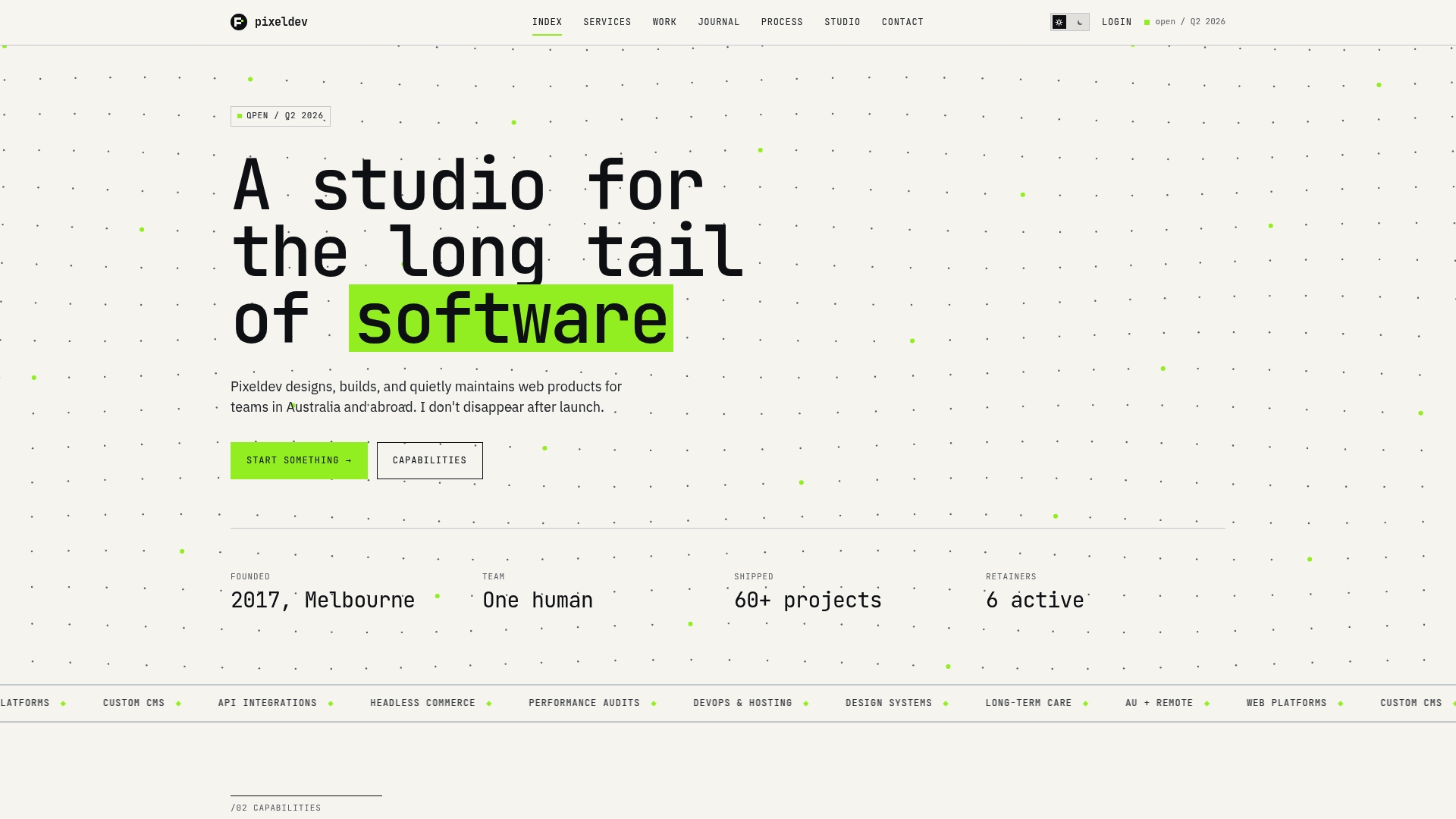
From initial discovery and design through to engineering, deployment, and ongoing maintenance, Pixeldev covers the entire project lifecycle. Their small, senior team means you work directly with the engineers building your system, not account managers relaying messages. Their end-to-end development services reflect a genuine commitment to systems that hold up over time, not just at launch. If you want to understand the kinds of platforms a dedicated partner can deliver, their web application examples guide is a practical place to start.
FAQ
What is a software development partner?
A software development partner is an external organisation that takes end-to-end responsibility for your software project, covering discovery, design, engineering, QA, and post-launch support. Unlike a vendor, they co-own project outcomes and integrate closely with your team.
How does a software partner differ from a freelancer?
A freelancer typically handles a specific task or skill in isolation, with no accountability for the broader project outcome. A software development partner manages the full project lifecycle and maintains ongoing responsibility for system performance and evolution.
What should you expect from a development partner post-launch?
A genuine partner provides maintenance, monitoring, security patches, performance improvements, and feature updates after launch. Software evolves continuously with new features and API changes, and a real partner remains engaged through that process.
How do you evaluate the quality of a software development partner?
Look beyond testimonials and case study screenshots. Client retention rates and average partnership length are stronger indicators of consistent delivery quality than curated reviews.
Is outsourcing software development the same as hiring a software partner?
Not necessarily. Outsourcing software development can mean hiring a vendor purely for cost reduction. A software development partner goes further, acting as an extension of your team, contributing to strategy, and taking accountability for outcomes across the full project lifecycle.