Services/Websites and WooCommerce
WordPress and WooCommerce, built like software.
Fast, maintainable sites with custom blocks, checkout extensions and plugin work, from someone who has spent years inside WooCommerce and writes a plugin that stores around the world rely on.
Sound familiar?
A page-builder site that’s slow and fragile
Forty plugins, a theme nobody dares update, and a homepage that takes six seconds on a phone.
A checkout that needs something plugins don’t do
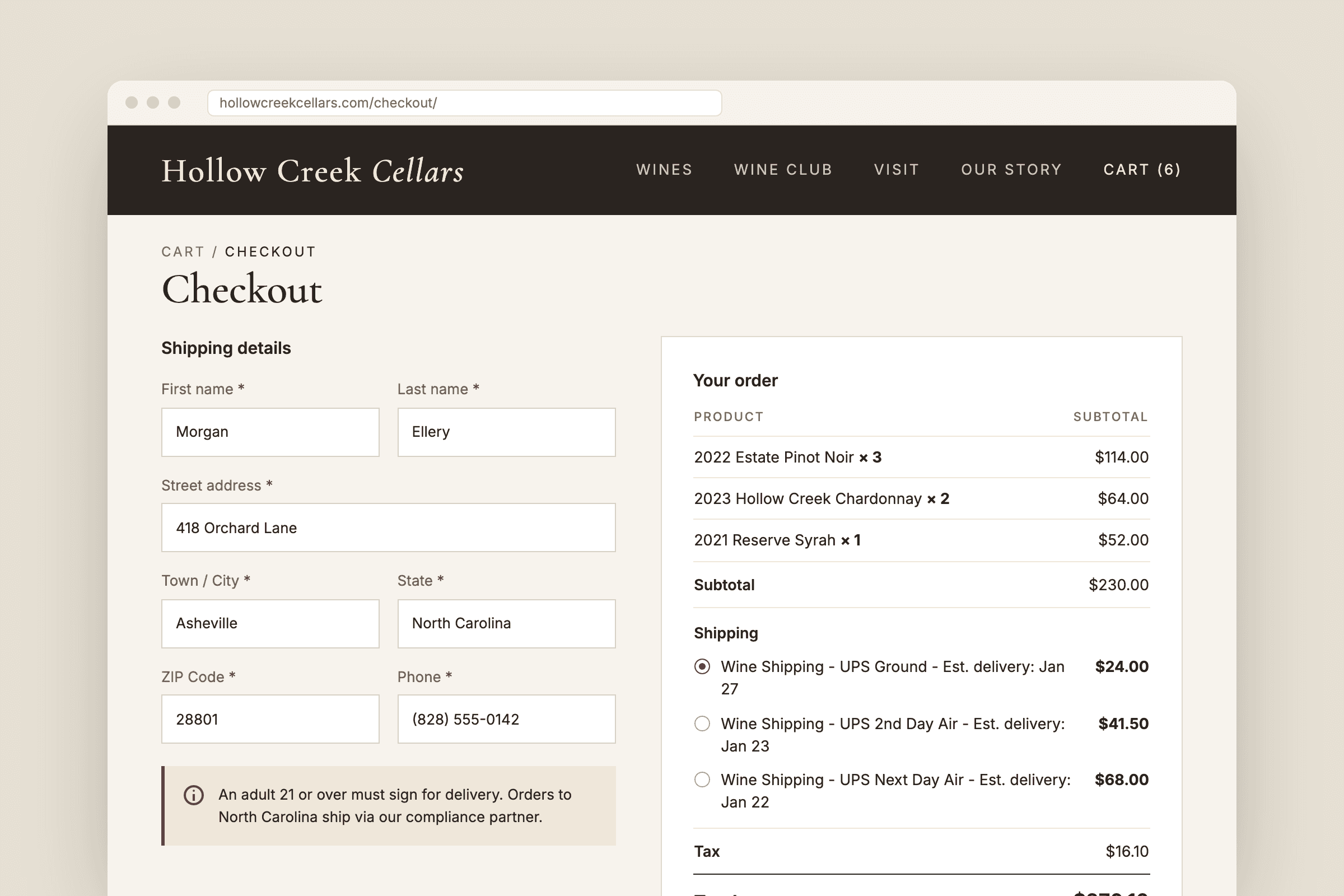
Pickup windows, deposits, trade pricing, custom fields that flow through to the order. The gap between “nearly” and “exactly”.
Thousands of products to import or move
Supplier feeds, a Shopify to Woo migration, or a catalogue that’s never been consistent.
The developer who built it has vanished
Most of my website work starts with a site someone else built. I’ll tell you honestly whether to fix it or start again.
What I build
Fewer plugins, more code you own, and an editing experience that makes sense to the person updating the site on a Tuesday afternoon.
- New WordPress and WooCommerce buildsCustom themes built on the block editor, so editors get real blocks rather than a page builder’s idea of them.
- Custom blocks, ACF and theme developmentBlocks that match your content, ACF where it earns its place, and themes driven by design tokens so a restyle is a settings change.
- Checkout extensions and plugin developmentThe exact checkout behaviour you need, written as a proper plugin with filters and hooks, not a snippet in functions.php.
- Performance and security fixes on existing sitesPlugin audits, caching, image handling, Core Web Vitals, and cleaning up after a compromise when it’s already happened.
- Shopify and multisite WordPressShopify builds and apps where that’s the right platform, and multisite networks for groups with many brands or locations.
- Migrations and large catalogue importsMoving platforms without losing orders or rankings, and scheduled imports from supplier feeds that keep thousands of products current.
How I approach it
1
Lean builds
Every plugin is a dependency someone else controls. I’d rather write forty lines of code than install one that does a thousand things you don’t need.
2
Editors can actually edit
Custom blocks with the options you need and none you don’t. You shouldn’t need to call me to change a heading.
3
Measured, not guessed
Core Web Vitals on real devices before and after. If I tell you it’s faster, there’s a number behind it.
Related work
All case studiesQuestions I get asked
WordPress, or something else?
WordPress for content-heavy sites and WooCommerce for most stores; Shopify when its ecosystem fits better; Next.js when it’s really an app with a website attached. I’ll recommend the one that suits, not the one I feel like building.
Can you work with our designer?
Yes. Hand me the Figma file and I’ll build it faithfully, including the bits that are hard. If you don’t have a designer, I’ll put together a clean, structured layout and we’ll refine it on staging.
Can you fix a site someone else built?
That’s most of what comes through the door. I’ll look at it first and tell you plainly whether it’s worth fixing or faster to rebuild, with a price for each.
Send me the URL.
I’ll have a look at what’s there and come back with what I’d fix, what I’d leave, and what it would cost.